March 13, 2010


more diavlogs


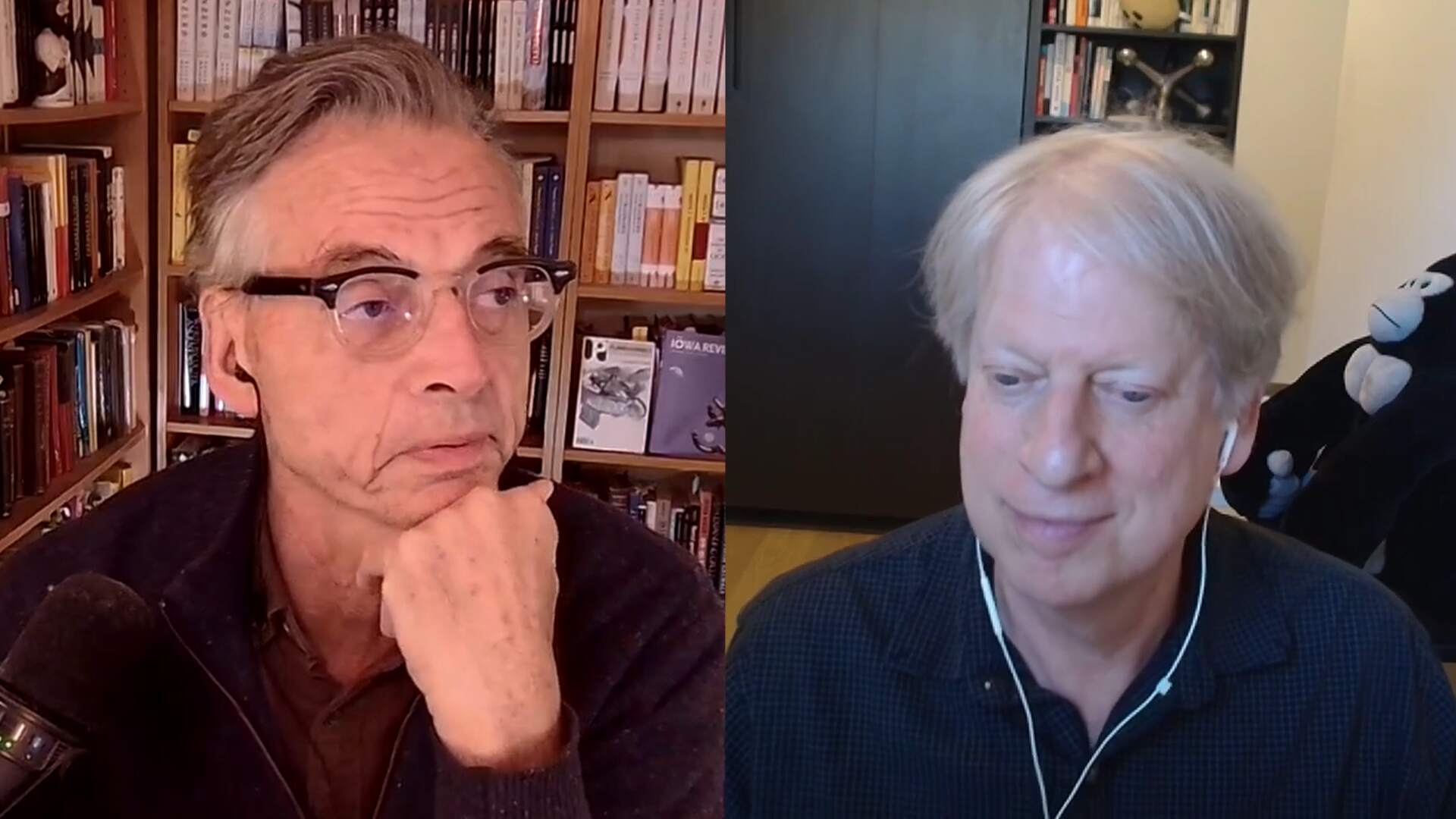
Science Saturday: Frontiers of Gerontology
Play entire diavlog
Recorded: November 26 Posted: December 13
email


View Thread Post Comment
Titstorm wrote on 12/13/2008  at  10:41 AM
Re: Science Saturday: Frontiers of Gerontology
the "details of growing old" section was fantastic. thanks, Aubrey!
and thanks for not being insanely cocky while contributing zero substance like that AI dreadlocks guy Eliezer was paired with last time.
View Thread Post Comment
Anyuser wrote on 12/13/2008  at  01:45 PM
Is fear of death an evolutionary adaptation?
I agree with the likes of Ernest Becker, Robert Lifton, Julian Barnes, and Philip Larkin that fear of death is universal and innate among humans. It’s not learned; I’ve observed fear of death in little kids. By “fear of death” I mean the fear of being dead, fear of oblivion, as distinguished from fear of dying, that is, causes of death. I posit that fear of oblivion is unique to humans, because it entails abilities that no other species possesses: an ability for abstract thought, that is, an ability to consciously process the meaning of oblivion; and an ability for foresight, that is, to foresee and think about the future, to grasp “inevitability.” A chimpanzee is innately afraid of things that might harm it—snakes, fire, leopards, etc—but it’s not capable of thinking, holy shit, someday I’m going to die and there’s not a thing I can do about it.
If the fear of death is universal and innate among humans, it must be a product of evolution, right? And if so, it must have evolved as human cognition evolved, right? That is, fear of death couldn’t exist without human cognition. Well then, why did it evolve? Other innate emotions (jealousy, love of babies) are more readily explicable in evolutionary terms. A fear of snakes evolved, before human
read more . . .
View Thread Post Comment
JoeK wrote on 12/13/2008  at  02:19 PM
Re: Science Saturday: Frontiers of Gerontology
Can't resist asking, is Aubrey related to Gandalf Da Gray?
Looking forward to listening to him and Eliezer.
View Thread Post Comment
BeachFrontView wrote on 12/13/2008  at  02:37 PM
Re: Science Saturday: Frontiers of Gerontology
Aubrey De Grey on aging @ TED
http://www.ted.com/index.php/talks/a...oid_aging.html
View Thread Post Comment
Jyminee wrote on 12/13/2008  at  02:39 PM
Re: Is fear of death an evolutionary adaptation?
I think you're overanalyzing this, Anyuser, when a simple evo-psych answer is obvious: once you are dead, you can no longer reproduce. An aversion to death, and doing things that will result in death, is good for spreading one's genes.
View Thread Post Comment
Jyminee wrote on 12/13/2008  at  03:21 PM
One good thing about death
This reminded me of this clip from a Free Will earlier this year. The more old people there are in a culture, the harder it is for that culture to improve. Most people who support gay marriage (such as myself) are looking forward to 10 or 15 years from now when the old voters will "clear out" and make way for young people who aren't scared of gays and lesbians. Imagine if those old fogies kept on living, and voting, forever--scary thought!
View Thread Post Comment
JoeK wrote on 12/13/2008  at  03:36 PM
Re: One good thing about death
Quoting Jyminee: The more old people there are in a culture, the harder it is for that culture to improve. Most people who support gay marriage (such as myself) are looking forward to 10 or 15 years from now when the old voters will "clear out" and make way for young people who aren't scared of gays and lesbians. Imagine if those old fogies kept on living, and voting, forever--scary thought!
And if the sixties generation of the young people had their way, we could have had reeducation camps and killing fields here in America. How sad what the wonderful experience our nation missed.
View Thread Post Comment
Jyminee wrote on 12/13/2008  at  03:46 PM
Re: One good thing about death
Quoting JoeK: And if the sixties generation of the young people had their way, we could have had reeducation camps and killing fields here in America. How sad what the wonderful experience our nation missed.
Well, obviously I would not want nineteen-year olds running the world. (Although the people who came of age in the 60's are running the world now, and doing a semi-crappy job of it.) But listen to that clip from Kerry and Will--old people have their own interests and beliefs that are often harmful to the rest of us.
View Thread Post Comment
JoeK wrote on 12/13/2008  at  04:05 PM
Re: One good thing about death
Quoting Jyminee: Well, obviously I would not want nineteen-year olds running the world. (Although the people who came of age in the 60's are running the world now, and doing a semi-crappy job of it.) But listen to that clip from Kerry and Will--old people have their own interests and beliefs that are often harmful to the rest of us.
God forbid the country should exercise some prudence in its immigration policy.
What about the poor people? I betcha poor people, even more than old folks, have some interests and beliefs that are harmful to the rest of us.
View Thread Post Comment
Titstorm wrote on 12/13/2008  at  04:08 PM
Re: One good thing about death
Quoting JoeK: And if the sixties generation of the young people had their way, we could have had reeducation camps and killing fields here in America. How sad what the wonderful experience our nation missed.
I know! I'm glad people who like to start unnecessary wars won out so we can enjoy their ideology instead. All hippies did was tackle civil rights, environmentalism, protest unnecessary wars (again, worthless), and womens rights. what a bunch of losers! they should've done what you stand for instead.
View Thread Post Comment
BornAgainDemocrat wrote on 12/13/2008  at  04:23 PM
Re: Science Saturday: Frontiers of Gerontology
Life, a sexually transmitted disease that is always fatal. My oncologist said that.
View Thread Post Comment
JoeK wrote on 12/13/2008  at  04:30 PM
Re: One good thing about death
Quoting Titstorm: I know! I'm glad people who like to start unnecessary wars won out so we can enjoy their ideology instead. All hippies did was tackle civil rights, environmentalism, protest unnecessary wars (again, worthless), and womens rights. what a bunch of losers! they should've done what you stand for instead.
Well, we saw what happened in other countries in which fascistic youth movements, such as sixties New Left, prevailed. It wasn't nice. Fortunatelly, in American democracy, their ideas were offset by whatever opinion old geezers held on issues at stake and, on balance, everything turned out well.
View Thread Post Comment
Titstorm wrote on 12/13/2008  at  04:44 PM
Re: One good thing about death
Quoting JoeK: Well, we saw what happened in other countries in which fascistic youth movements, such as sixties New Left, prevailed. It wasn't nice. Fortunatelly, in American democracy, their ideas were offset by whatever opinion old geezers held on issues at stake and, on balance, everything turned out well.
we're doing well now? pretty low standards
View Thread Post Comment
Wonderment wrote on 12/13/2008  at  08:08 PM
Demographics
Neither of the speakers discussed demographics.
How would a vastly increased population of healthy 120-year-olds be sustainable?
Curing aging would have an enormous impact on civilization and human ecology; so it is not a given that an enhanced lifespan would necessarily be as marvelous for humanity as Aubrey and Eliezer suggest.
It might be smart to at least ask the question: How long does a person have the right to live? It is not self-evident that the answer is "forever."
View Thread Post Comment
bjkeefe wrote on 12/13/2008  at  08:26 PM
Re: Is fear of death an evolutionary adaptation?
I agree with Jyminee in that you may be overanalyzing this. I also think you might be making too much of a distinction between basic survival instinct and simple joie de vivre, and the fear that comes from contemplating what (if anything) happens after death.
I also question a key assumption that you seem to be making, that the fear of death is greater than the fear of dying. I don't know how representative I am of our species, but I can say without a doubt (possibly contra the authors you cited) that I am far more afraid of dying than of being dead, because I believe that when I'm dead, I will be beyond caring.
I do think there is something to your view that humans appear unique in fearing the thought of being dead and/or what happens to oneself after death. This, of course, is part of why we have developed religions.
View Thread Post Comment
bjkeefe wrote on 12/13/2008  at  08:41 PM
Re: Demographics
Quoting Wonderment: It might be smart to at least ask the question: How long does a person have the right to live? It is not self-evident that the answer is "forever."
That was my instinctive reaction at the beginning of this diavlog, too, but the more I thought about it, the more I wasn't happy with it.
We already do a lot to stave off both dying and the onset of age-related frailty. Some of what we do might be called "natural; e.g., eating properly, exercising, limiting intake of substances with toxic side effects, and so on. But we also do a lot more than that. Think about the various medications that many people take to, say, manage their cholesterol levels, mitigate calcium depletion, control blood pressure, keep their hearts operating normally, and so on. Think about younger people, too, who may need regular insulin injections or whatever it is one takes if one has a faulty thyroid. The list, I'm sure, could be made quite long.
How are these people doing anything but, at base, insisting upon a right to live a long life?
I agree that suddenly coming up with a way to keep people healthy for much longer than we live now would
read more . . .
View Thread Post Comment
bjkeefe wrote on 12/13/2008  at  08:49 PM
Re: Science Saturday: Frontiers of Gerontology
Quoting mvantony: Great diavlog. Thanks to BhTV for bringing in Aubrey de Grey.
Second that. And a great job of interviewing by Eliezer.
View Thread Post Comment
bjkeefe wrote on 12/13/2008  at  08:55 PM
Re: One good thing about death
Quoting JoeK: ... fascistic youth movements, such as sixties New Left, ...
Look, I know the whole "Commie" tag hasn't been working for you wingnuts lately, but really, just because a pseudo-intellectual creature of nepotism who eats too many Cheetos farts out a book that claims it, it isn't automatically true that liberals are fascists.
Here's five cents. Go buy yourself another buzzword.
View Thread Post Comment
AemJeff wrote on 12/13/2008  at  08:59 PM
Re: Demographics
Quoting bjkeefe: ... some of which could be viewed as problems.
Yup. Just like the effects of every other significant advance: Automobiles, energy, communications, etc... And we've already doubled average lifespan, at least compared to nature, so really what we're talking about now is incremental. The question ought not be "Should we do it?" - I think the only answer to that is yes - rather, we should ask: "How do we deal with its effects?"
View Thread Post Comment
bjkeefe wrote on 12/13/2008  at  09:00 PM
Re: Science Saturday: Frontiers of Gerontology
Quoting JoeK: Can't resist asking, is Aubrey related to Gandalf Da Gray?
I was more immediately made to think of Lazarus Long.
View Thread Post Comment
bjkeefe wrote on 12/13/2008  at  09:10 PM
Re: Demographics
Quoting AemJeff: Yup. Just like the effects of every other significant advance: Automobiles, energy, communications, etc... And we've already doubled average lifespan, at least compared to nature, so really what we're talking about now is incremental. The question ought not be "Should we do it?" - I think the only answer to that is yes - rather, we should ask: "How do we deal with its effects?"
We're on the same page except maybe for one part. I am not at all convinced we "should do it" in the sense of a large-scale shift of resources toward that problem. I'd have to hear about where the money was coming from, and hence not going to, first. For example, if research into staving off aging means less money would be spent on, say, pre- and post-natal care, figuring out how get a handle on malaria, or curing AIDS, I'd vote no.
I am not against the research the Aubrey advocates per se, but I still do worry that this is likely to be just another area where a comparative few, who already have a lot, benefit at the expense of many more who have less. So, I would probably be against making this part of publicly-funded research, unless I could be persuaded that there
read more . . .
View Thread Post Comment
AemJeff wrote on 12/13/2008  at  09:20 PM
Re: Demographics
Quoting bjkeefe: We're on the same page except maybe for one part. I am not at all convinced we "should do it" in the sense of a large-scale shift of resources toward that problem. I'd have to hear about where the money was coming from, and hence not going to, first. For example, if research into staving off aging means less money would be spent on, say, pre- and post-natal care, figuring out how get a handle on malaria, or curing AIDS, I'd vote no.
I am not against the research the Aubrey advocates per se, but I still do worry that this is likely to be just another area where a comparative few, who already have a lot, benefit at the expense of many more who have less. So, I would probably be against making this part of publicly-funded research, unless I could be persuaded that there were likely to be spin-offs that would benefit a larger group.
I wouldn't call the hundred million dollar figure Aubrey blue-skied in response to Eliezer's question a major shift of resources; certainly not in the context of HIV or cancer research. I'm also not sure that elites would necessarily be the primary beneficiaries (that
read more . . .
View Thread Post Comment
Wonderment wrote on 12/13/2008  at  09:57 PM
Re: Demographics
We're on the same page except maybe for one part. I am not at all convinced we "should do it" in the sense of a large-scale shift of resources toward that problem. I'd have to hear about where the money was coming from, and hence not going to, first. For example, if research into staving off aging means less money would be spent on, say, pre- and post-natal care, figuring out how get a handle on malaria, or curing AIDS, I'd vote no.
That would certainly be one of my concerns.
The problem is that when you have scientists and writers like Eliezer and Aubrey advocating for cryonics and 150-year lifespans, you run the risk of treating skeptics as anti-scientific, hopelessly uninformed and irrational. Eliezer suggested that older people didn't get the big picture because they were technologically out-of-touch meanies, sort of like Ted Stevens and the Internet tubes.
Biomedical science has plenty of ethicists who analyze and debate the implications of dramatically increased lifespans and resuscitation. It would be good to hear from them on Science Saturday as well.
Cryonics, for example, seems to raise some interesting questions about the rights of future inhabitants
read more . . .
View Thread Post Comment
bjkeefe wrote on 12/13/2008  at  09:58 PM
Re: Demographics
Quoting AemJeff: I wouldn't call the hundred million dollar figure Aubrey blue-skied in response to Eliezer's question a major shift of resources; certainly not in the context of HIV or cancer research. I'm also not sure that elites would necessarily be the primary beneficiaries (that would depend on what the treatments would entail) - but even if that were initially the case, medical advances don't seem to skew that way for long. Plenty of regular folks have open-heart surgery or complex cancer treatments, these days.
Good points.
One quibble: while I agree that for certain programs, $100 million is a relatively small fraction, I suspect that I could easily find places where I'd rather spend this kind of public money than on anti-aging research.
But, if you could come up with that money by, say, building one fewer F-22, I'd be happy to let you give the whole wad to Aubrey.
View Thread Post Comment
bjkeefe wrote on 12/13/2008  at  10:04 PM
Re: Demographics
Quoting Wonderment: [...]
Agree that cryonics opens a whole 'nother can of ethical worms. I haven't thought about it deeply, but my usual first reaction is that there's something awfully dubious about inventing another way to dump our problems on our (great-*)-grandchildren.
Any comments on my "rights" response?
View Thread Post Comment
Wonderment wrote on 12/13/2008  at  11:58 PM
Re: Demographics
Any comments on my "rights" response?
I tend to agree with you pragmatically for the following reasons: A system which errs on the side of patients' (citizens/consumers) rights is surely best. "Curing" aging is probably not qualitatively different from curing cancer (something everyone agrees is a good idea). And as Jeff suggests, medical advances usually do trickle down to everyone sooner or later.
I think ultimately, however, the rights question is best expressed this way: Do I have a right to zero-sum healthcare? In other words, if we have finite healthcare dollars, do I still have an unconditional right to life extension, when providing services to me means underserving someone else (the child with Malaria, for example).
There are a lot of end-of-life rights issues that we're already grappling with: Should your health insurance cover an expensive drug that will only increase life span an average of 90 days? Can we ever pull the plug on comatose people without their prior consent? Should there be a free market to buy and sell vital organs?
My main concern with life extension, however, is population. We didn't do very well in anticipating the problems of a projected 10 billion people on the planet, so I'm not
read more . . .
View Thread Post Comment
bjkeefe wrote on 12/14/2008  at  12:35 AM
Re: Demographics
Quoting Wonderment: [...]
Thanks for clarifying. Nothing to dispute there.
I will say, though, that this is a perfect example of why it drives me bananas when people talk about health care as a "right."
View Thread Post Comment
Nate wrote on 12/14/2008  at  12:44 AM
Re: Science Saturday: Frontiers of Gerontology
Awesome interview! This is probably my favorite guest so far on Science Saturday. Aubrey de Grey, PhD has some really interesting ideas.
View Thread Post Comment
Nate wrote on 12/14/2008  at  03:55 AM
Aubrey addresses Michael Brooks' concerns
When talking about his "7 Deadly Sins of Aging", de Grey pretty well put to rest the concerns that Michael Brooks had about cancer in his diavlog with John Horgan, which mentioned Aubrey specifically.
View Thread Post Comment
bjkeefe wrote on 12/14/2008  at  04:53 AM
Re: One good thing about death
Quoting JoeK: And if the sixties generation of the young people had their way, we could have had reeducation camps ... How sad what the wonderful experience our nation missed.
Not to worry -- the wingnuts have got you covered (emph. orig):
Pastor Steven Kern, husband of notorious Oklahoma state legislator Sally Kern, told a fellow he thought was an anti-gay ally,
We have to get rid of that and start curing those sinners. It's past time that this nation stopped placating sin and start putting them in education programs. Courts can force drug offenders into treatment centers and violent people into anger management. There's no reason our courts can't do that with homos.
View Thread Post Comment
EliezerYudkowsky wrote on 12/14/2008  at  05:56 AM
Re: Demographics
Quoting Wonderment: Eliezer suggested that older people didn't get the big picture because they were technologically out-of-touch meanies, sort of like Ted Stevens and the Internet tubes.
Biomedical science has plenty of ethicists who analyze and debate the implications of dramatically increased lifespans and resuscitation. It would be good to hear from them on Science Saturday as well.
I was actually supposed to interview a well-known bioconservative ethicist for BHTV, before the de Grey thing even came up.
And we did the interview. But, right at the end, his video recording program (which he hadn't used before) crashed, and we lost the whole interview.
I swear to the Flying Spaghetti Monster I am not making this up.
View Thread Post Comment
Francoamerican wrote on 12/14/2008  at  07:22 AM
Re: Science Saturday: Frontiers of Gerontology
I was reminded of a line from Beckett (Endgame?) while listening to this dialogue: "You're on earth now, there's no cure for that."
The search for the fountain of youth, the desire to "conquer" death by postponing it, has taken many forms through the ages---religion, philosophy and quackery have all made their contributions---but only in recent times has it taken the form of pseudo-science. I say "pseudo" because, as far as I can see, thanatology hasn't progressed much beyond the identification of the causal processes that lead inexorably to death. Mr. de Grey had little or nothing to say about what kind of research would be necessary to stall or reverse those processes. Could this be because his science is akin to the quest of alchemists to trasmute lead into gold?
I suppose it would be nice to stay youthful as long as possible. Eternal life, though, would have its drawbacks (cf. Swift and the Struldbruggs). I prefer the wisdom of the Stoics and Montaigne: The premeditation of death is the premeditation of freedom. Learning how to die is learning how to live well.
View Thread Post Comment
bohead wrote on 12/14/2008  at  10:16 AM
Re: Science Saturday: Frontiers of Gerontology
Quoting Francoamerican: I was reminded of a line from Beckett (Endgame?) while listening to this dialogue: "You're on earth now, there's no cure for that."
The search for the fountain of youth, the desire to "conquer" death by postponing it, has taken many forms through the ages---religion, philosophy and quackery have all made their contributions---but only in recent times has it taken the form of pseudo-science. I say "pseudo" because, as far as I can see, thanatology hasn't progressed much beyond the identification of the causal processes that lead inexorably to death. Mr. de Grey had little or nothing to say about what kind of research would be necessary to stall or reverse those processes. Could this be because his science is akin to the quest of alchemists to trasmute lead into gold?
I suppose it would be nice to stay youthful as long as possible. Eternal life, though, would have its drawbacks (cf. Swift and the Struldbruggs). I prefer the wisdom of the Stoics and Montaigne: The premeditation of death is the premeditation of freedom. Learning how to die is learning how to live well.
Do you think immortality is impossible or that it's undesirable or that it's both? Do you
read more . . .
View Thread Post Comment
Wonderment wrote on 12/14/2008  at  03:26 PM
Re: Demographics
I swear to the Flying Spaghetti Monster I am not making this up.
I believe you (like the white socks).
Don't fret though. Although I'm sure the original talk with the ethicist would have hastened the coming of the Singularity, you can always re-record.
Thanks for your appearances on Bheads. I've watched them all with great interest.
View Thread Post Comment
Francoamerican wrote on 12/15/2008  at  05:37 AM
Re: Science Saturday: Frontiers of Gerontology
Quoting bohead: Do you think immortality is impossible or that it's undesirable or that it's both? Do you think these are distinct questions? If immortality is impossible, isn't its desirability a non-issue?
Your third question answers itself. Are the two questions distinct? Yes, of course, but no one can answer the question of possibility since we would have to have knowledge of a "substantial" soul that could exist apart from its physical embodiment and its awareness of the passage of time. Self-consciousness, which is all we know about ourselves, is inconceivable outside space and time.
So that leaves a purely hypothetical question: If the "soul" were immortal, would such a state be desirable? Only if you could somehow escape the boredom, the ennui, the taedium vitae, which, as Beckett knew better than anyone, is THE problem of self-consciousness and its awareness of the passage of time.
View Thread Post Comment
Corvid wrote on 12/15/2008  at  05:47 PM
Re: Science Saturday: Frontiers of Gerontology
Eliezer uses the word 'I' too much.
View Thread Post Comment
mansfeild wrote on 12/15/2008  at  08:33 PM
Re: Science Saturday: Frontiers of Gerontology
I am not sure why Arthur hasn't provided a link to the Methuselah foundation next to the link to Aubrey's book,
here is the link to the foundation for people who would like to learn more what it is currently doing.
http://methuselahfoundation.com/


uncle ebeneezer: What does it really mean? 

uncle ebeneezer: Is Tom purposely trying to steer interest away from his profession? 

themightypuck: Bob the Baptist comes out. 

uncle ebeneezer: Will formulates a scenario where the terrorists, literally, win! 

sapeye: Hmmm, is Bob guilty of serious stereotyping? 

Stapler Malone: No, Bob. It’s not. Nothing ever is.  

d7greene: Lawrence Lessig knows a juice-boxer when he sees one. 

Toryentalist: Matt is great, Matt is great—listen and repeat. 

thouartgob: Joel’s elegant refutation of Bob’s point. 

uncle ebeneezer: George Johnson, hopeless romantic! 

themightypuck: Robert Wright, Asteroid Cowboy. 

bjkeefe: Spelling is fun-damental! 

nikkibong: The joy of taking stuff out of context. 

bjkeefe: Who stole Matthew’s tie? 

uncle ebeneezer: The Art of Subtlety. 

bjkeefe: Heather slaps the entire BhTV community. 

bjkeefe: Can anyone find a case where this is not ultimately Mickey's advice to Dems? 

Ken Davis: The racial blind taste test. 

Stapler Malone: Go forward, not backward; upward not forward; and always twirling, twirling, twirling towards freedom.... 

Simon Willard: Bob steps outside himself here. 

JonIrenicus: Puzzle spelled out. 

uncle ebeneezer: George's response here was absolutely priceless. 

graz: Bob takes Tom Jones down a peg. 

bjkeefe: Entry for a video dictionary: "unflappable." 

almostaquantum: Hooray: Jonah Goldberg dismisses the ticking time-bomb scenario. 

podcasts

audio (iTunes)
audio (other feed)
video (iTunes)
video (other feed)

follow us

RSS
Facebook
Twitter

store


Buy Bloggingheads T-shirts and mugs at CafePress

mailing list

Get a notification when a new diavlog is posted

contact

Send your questions or comments to