September 2, 2010


more diavlogs


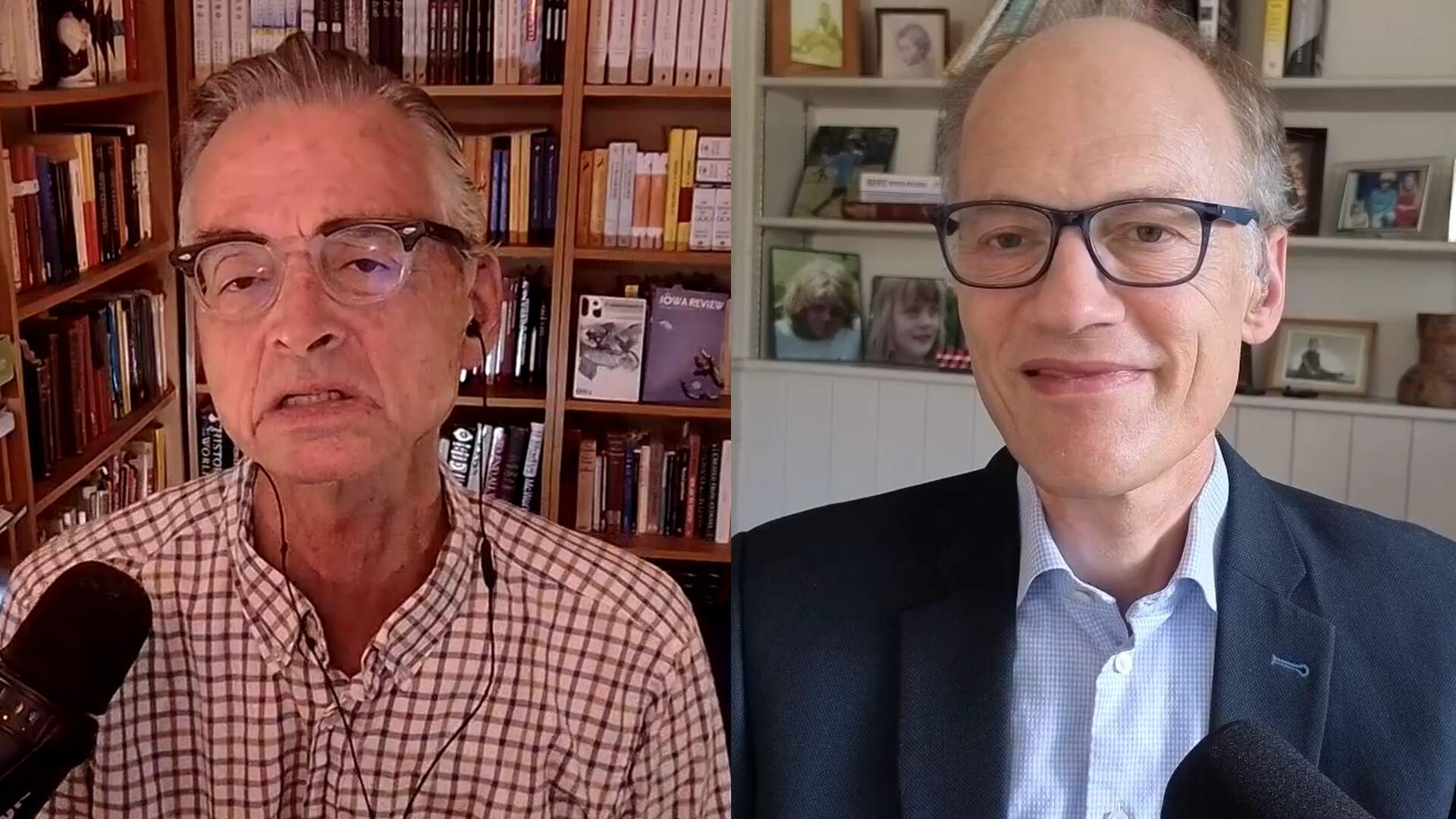
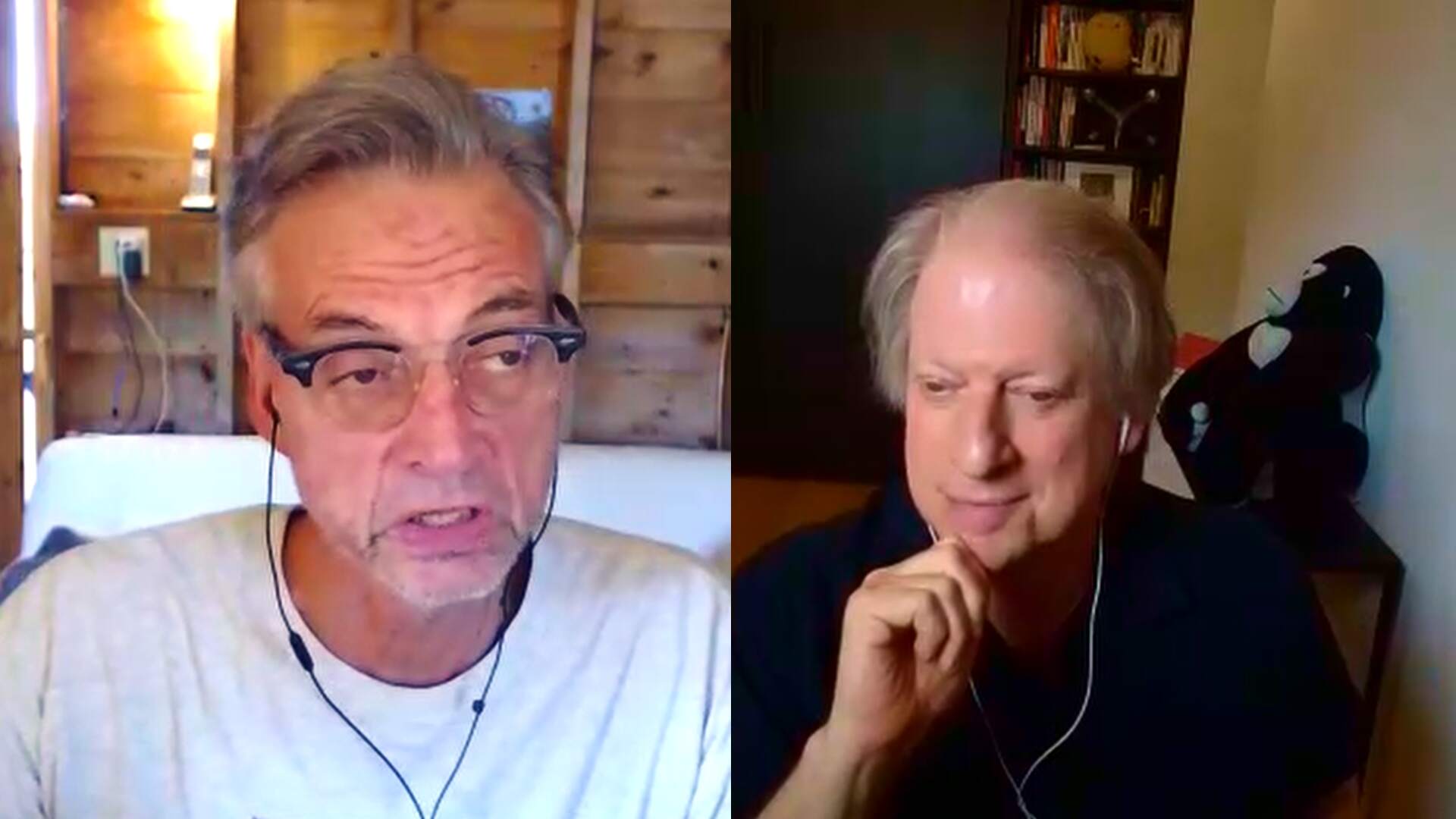
The Real Social Networks
Play entire diavlog
Recorded: October 15, 2009 Posted: October 20
email
Facebook


View Thread Post Comment
Meng Bomin wrote on 10/20/2009  at  09:29 PM
Re: The Real Social Networks (James Fowler & Will Wilkinson)
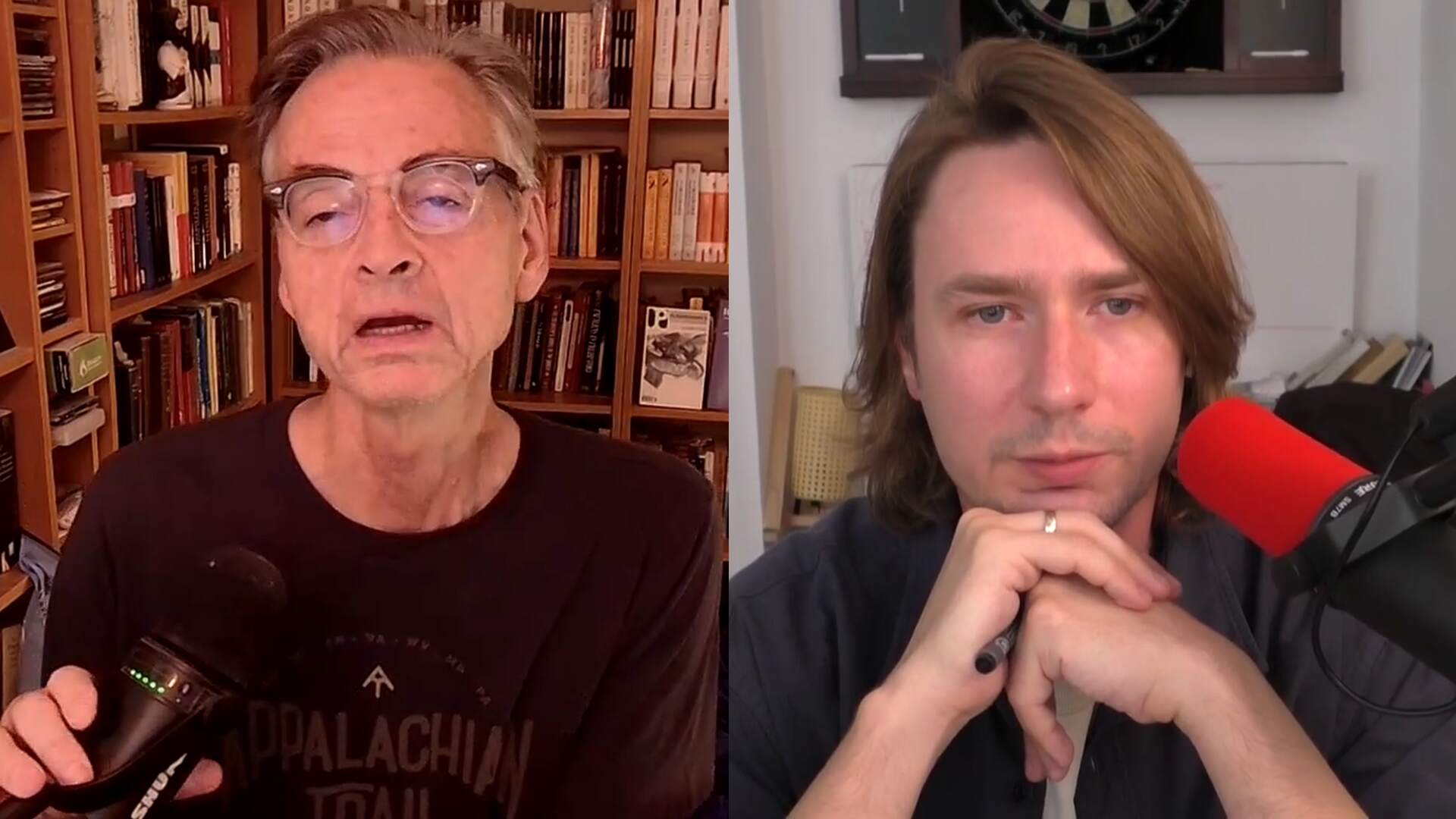
I like the silent shout out that Will gives to his fiancé [for those unaware: Kerry Howley].
Anyway, I thought that it was a very interesting diavlog and I am especially intrigued by the notion that our behaviors affect people up to three degrees away from us but seemingly no further. I guess I'll have to get the book.
View Thread Post Comment
TwinSwords wrote on 10/20/2009  at  09:51 PM
Re: The Real Social Networks (James Fowler & Will Wilkinson)
Quoting Meng Bomin: I like the silent shout out that Will gives to his fiancé [for those unaware: Kerry Howley]
Awww, how touching. Thanks for pointing it out; I never would have seen it if you didn't mention it. (I usually only listen to, rather than watch, diavlogs.)
View Thread Post Comment
JonIrenicus wrote on 10/20/2009  at  10:45 PM
Re: The Real Social Networks (James Fowler & Will Wilkinson)
To the question of whether new friends current habits will influence someone who becomes their friend, I think the answer will be yes.

I remember as a child having a cousin who moved from LA to Grand Rapids Michigan, and after a couple years the kid sounded flat out waspy. It was pretty hilarious, especially since he is a mix of black/mexican.

It's related to mimicry, and that is probably part of what is going on with changes after you already became friends.

It's similar to the way we are more comfortable to people who mimic us, and feel more alien towards those who do not. Though the breakdown of that may be interesting.
If mimicking others is a subconscious way to say you like a person and are trying to fit in, I wonder if more attractive people get mimicked more, and less attractive get far less?
Or what influence personality and happiness levels have on others want to mimic them more...
Somebody that does research get on that. Or point to where it's already done. I want to know.
View Thread Post Comment
Me&theboys wrote on 10/21/2009  at  03:04 PM
Re: The Real Social Networks (James Fowler & Will Wilkinson)
Thanks to James for coming on bhtv to discuss his work and to bhtv and Will for bringing him to us! Would love to see James come back to discuss his research on partisanship and genopolitics. All of his work is very fascinating.
View Thread Post Comment
Unit wrote on 10/21/2009  at  11:17 PM
Re: The Real Social Networks (James Fowler & Will Wilkinson)
I'm not convinced with the "genetic" claims and the "group selection" claims. But who knows, James says he has data on this. Yet I remain skeptical towards the broader version of these claims. My sense is that the nature of our networks is changing rapidly, at rates that are far larger than our propensity for adaptation is capable of keeping up with. Not only our networks are getting more and more complex but they also get more and more intertwined with one another. So: what mechanism would discard one failing social network and retain a different one? I see plenty of opportunities for suboptimal networks to free-ride on more successful ones. To give an example I can see our deficient system of democracy lasting for a very long time.
View Thread Post Comment
bjkeefe wrote on 10/21/2009  at  11:30 PM
Re: The Real Social Networks (James Fowler & Will Wilkinson)
Quoting Unit: I'm not convinced with the "genetic" claims and the "group selection" claims. But who knows, James says he has data on this. Yet I remain skeptical towards the broader version of these claims. My sense is that the nature of our networks is changing rapidly, at rates that are far larger than our propensity for adaptation is capable of keeping up with. Not only our networks are getting more and more complex but they also get more and more intertwined with one another. So: what mechanism would discard one failing social network and retain a different one? I see plenty of opportunities for suboptimal networks to free-ride on more successful ones. To give an example I can see our deficient system of democracy lasting for a very long time.
I was with you up till the last sentence. After that one I can only challenge you with my favorite cliché. In other words, got a better idea?
View Thread Post Comment
Unit wrote on 10/22/2009  at  08:55 AM
Re: The Real Social Networks (James Fowler & Will Wilkinson)
Quoting bjkeefe: I was with you up till the last sentence. After that one I can only challenge you with my favorite cliché. In other words, got a better idea?
It's not hard to imagine better systems. That doesn't mean that it's practical to switch to them. Also I can imagine that democracy is highly inefficient but is some kind of local equilibrium that it is hard to jump out of.
View Thread Post Comment
bjkeefe wrote on 10/22/2009  at  04:25 PM
Re: The Real Social Networks (James Fowler & Will Wilkinson)
Quoting Unit: It's not hard to imagine better systems. That doesn't mean that it's practical to switch to them. Also I can imagine that democracy is highly inefficient but is some kind of local equilibrium that it is hard to jump out of.
Please, imagine one out loud.
View Thread Post Comment
Unit wrote on 10/22/2009  at  04:39 PM
Re: The Real Social Networks (James Fowler & Will Wilkinson)
Quoting bjkeefe: Please, imagine one out loud.
Well, for instance our current system of laws is so complex that often two distinct regulations work against each other, or result in double-taxation, or are unduly unfair for certain groups etc...(you can let you imagination loose as well), and even though we can think of a code that would be better we would not necessarily be able to say how to get there.
View Thread Post Comment
bjkeefe wrote on 10/22/2009  at  06:00 PM
Re: The Real Social Networks (James Fowler & Will Wilkinson)
Quoting Unit: Well, for instance our current system of laws is so complex that often two distinct regulations work against each other, or result in double-taxation, or are unduly unfair for certain groups etc...(you can let you imagination loose as well), and even though we can think of a code that would be better we would not necessarily be able to say how to get there.
Be that as it may, what I was asking you to imagine out loud was a system that you think would be better than the sort of representative democracy that we have in the US, or better than some sort of democracy in general, without worrying about how we'd bring it into existence.
Certainly I agree that there is a lot of cruft in our system, but that's not really something anyone would dispute.
View Thread Post Comment
Unit wrote on 10/22/2009  at  09:34 PM
Re: The Real Social Networks (James Fowler & Will Wilkinson)
Quoting bjkeefe: Be that as it may, what I was asking you to imagine out loud was a system that you think would be better than the sort of representative democracy that we have in the US, or better than some sort of democracy in general, without worrying about how we'd bring it into existence.
Certainly I agree that there is a lot of cruft in our system, but that's not really something anyone would dispute.
I think it's quite likely that we will evolve different systems in the future. And, even currently, representative democracy is only one of many ways we have to act collectively. So you don't really have to imagine if you don't feel like it. That's the point of these social networks: in part it's a way to solve collective problems without resorting to elected officials.
View Thread Post Comment
bjkeefe wrote on 10/23/2009  at  12:08 PM
Re: The Real Social Networks (James Fowler & Will Wilkinson)
Quoting Unit: [...] So you don't really have to imagine if you don't feel like it. [...]
I was interested only in whether you already had.
View Thread Post Comment
Unit wrote on 10/23/2009  at  10:18 PM
Re: The Real Social Networks (James Fowler & Will Wilkinson)
Quoting bjkeefe: I was interested only in whether you already had.
Yes of course, all the time. I'd be worried you hadn't. Ken Arrow showed a while back that many times the democratic process can be high-jacked by the agenda-setters, we know that voting at best measure the order of our preferences not their intensity, we know the problems that arise with bundling and with rational ignorance, etc...there's a whole branch of economics called Public Choice that studies exactly these problems: what is the proper scope of democracy, what are its known pitfalls, what spontaneous arrangements arise to get around some of these pitfalls. Anyone who is sincerely worried about authoritarian top-down decision-making and studies bottom-up emergent social networks (and yes 'markets' are part of it, but there are other 'non-market' institutions as well), is on a daily basis arguing and imagining alternatives to democracy. In fact, if you share my view, that the important divide is top-down centralized decisions versus decentralized bottom-up choices, then 'democracy' is more akin to 'dictatorship'. There are 'democracies' in Africa or in the Middle East for instance that are much worse than some dictatorships. But that's not really a discussion I care to have.
View Thread Post Comment
bjkeefe wrote on 10/23/2009  at  10:24 PM
Re: The Real Social Networks (James Fowler & Will Wilkinson)
Quoting Unit: Yes of course, all the time. I'd be worried you hadn't.
I stopped a while ago, having come to the same conclusion as Mr. Churchill.
Now I'm more concerned with addressing problems that inevitably crop up as people figure out how to game any attempt at implementing a good approximation to a democracy, and thoroughly unconcerned with trying to come up with something to replace democracy. But I'm always willing to hear what someone else has imagined.
View Thread Post Comment
Unit wrote on 10/23/2009  at  11:36 PM
Re: The Real Social Networks (James Fowler & Will Wilkinson)
Quoting bjkeefe: I stopped a while ago, having come to the same conclusion as Mr. Churchill.
Now I'm more concerned with addressing problems that inevitably crop up as people figure out how to game any attempt at implementing a good approximation to a democracy, and thoroughly unconcerned with trying to come up with something to replace democracy. But I'm always willing to hear what someone else has imagined.
I'll take Arrow over Churchill.
View Thread Post Comment
bjkeefe wrote on 10/23/2009  at  11:51 PM
Re: The Real Social Networks (James Fowler & Will Wilkinson)
Quoting Unit: I'll take Arrow over Churchill.
I don't get the reference, sorry.
View Thread Post Comment
Unit wrote on 10/24/2009  at  12:02 AM
Re: The Real Social Networks (James Fowler & Will Wilkinson)
Quoting bjkeefe: I don't get the reference, sorry.
Ken Arrow won a Nobel prize in Economics in part for his Impossibility Theorem.
Aside for the mathematical prowess needed to prove this theorem, the real contribution was to show that again and again in real-life examples involving series of votes and elections, the outcome is decided by the order in which the votes are taken. Namely that the same series of votes taken in a different temporal order yield different outcomes. Two things arise from this: one is that it becomes almost impossible to decide what the "will of the people" actually is. And second, that in practice, shrewd and experienced agents (called agenda-setters) can manipulate the formalities of voting procedure to obtain the outcome they prefer.
View Thread Post Comment
bjkeefe wrote on 10/24/2009  at  12:18 AM
Re: The Real Social Networks (James Fowler & Will Wilkinson)
Quoting Unit: [...]
Okay. Thanks for the clarification.
View Thread Post Comment
rfrobison wrote on 10/24/2009  at  01:37 AM
Abstract vs. "Real" networks
I wonder what Mr. Fowler would have to say about the influence of --dunno what to call it, exactly--maybe abstract or symbolic networks, of which Bhtv is one example, versus concrete ones that we associated with friends, family, workplaces and so forth.
I joined the Bhtv "network" about seven months ago. There are people who comment regularly and guests who appear regularly that I feel I "know" in some sense, from the things that they say. I can see how their thinking might influence my own, depending on whether or not I held their views to be "correct," or whether I held them in high regard.
On the one hand, intuitively it makes sense that people that I meet face to face and have to deal with on a personal level would be far more influential in terms of my behavior than people with whom I've only exchanged words on a comment board. On the other, my ideas might just as easily be influenced by people that I've never met in the flesh.
I wonder, then, if these abstract networks aren't just as important as the "real" ones Mr. Fowler seems focused on.
View Thread Post Comment
PreppyMcPrepperson wrote on 10/25/2009  at  06:38 AM
Re: The Real Social Networks (James Fowler & Will Wilkinson)
Quoting Unit: the important divide is top-down centralized decisions versus decentralized bottom-up choices.
I agree with you that this is the ultimate either/or. Which side of this line someone comes down on is the first thing I try to understand when assessing their other positions, whether that person is classified 'left' or 'right' under our current denominations. I sense from our past encounters on these boards that you and I fall on opposite lines of this ultimate question, but I agree with you that it IS the ultimate question.
View Thread Post Comment
Unit wrote on 10/25/2009  at  10:11 AM
Re: The Real Social Networks (James Fowler & Will Wilkinson)
Quoting PreppyMcPrepperson: I agree with you that this is the ultimate either/or. Which side of this line someone comes down on is the first thing I try to understand when assessing their other positions, whether that person is classified 'left' or 'right' under our current denominations. I sense from our past encounters on these boards that you and I fall on opposite lines of this ultimate question, but I agree with you that it IS the ultimate question.
I think this question has been settled, at least in theory, with the work of uncountable economic and political theorists (in favor of bottom-up, of course). While (evolutionary) psychology comes in to explain why the romance with the top-down approach is still so prevalent in many people's minds. It has to do with the fact that the social networks that most affect our nature (our genes) are the smaller ones: family, small-firms, teams etc...The larger societal networks are harder to comprehend, often time we don't even realize all the benefits we draw from living in a (semi-)open society. These effects are also more recent and they began affecting us only about two hundred years ago with the start of the
read more . . .
View Thread Post Comment
PreppyMcPrepperson wrote on 10/25/2009  at  12:28 PM
Re: The Real Social Networks (James Fowler & Will Wilkinson)
Quoting Unit: I think this question has been settled, at least in theory, with the work of uncountable economic and political theorists (in favor of bottom-up, of course). While (evolutionary) psychology comes in to explain why the romance with the top-down approach is still so prevalent in many people's minds. It has to do with the fact that the social networks that most affect our nature (our genes) are the smaller ones: family, small-firms, teams etc...The larger societal networks are harder to comprehend, often time we don't even realize all the benefits we draw from living in a (semi-)open society. These effects are also more recent and they began affecting us only about two hundred years ago with the start of the industrial revolution.
As more and more people become aware of the larger networks they belong to and understand the dynamic nature of these arrangements, there's hope that the political discourse can start to change. However, I think it'll take a very long time (I could be wrong).
I think you're right, that the period we're entering may be particularly suited to the bottom-up. Lord knows what that does to people like me, who (while
read more . . .
View Thread Post Comment
Unit wrote on 10/25/2009  at  01:50 PM
Re: The Real Social Networks (James Fowler & Will Wilkinson)
Quoting PreppyMcPrepperson: I think you're right, that the period we're entering may be particularly suited to the bottom-up. Lord knows what that does to people like me, who (while not an authoritarian by any stretch), gravititate towards institutions over individuals.
You just have to broaden your understanding of institutions and "institutional diversity". Take for instance the work of this year's Nobel in Economics: Lin Ostrom. She studies concrete institutions that emerge in communities in order to solve problems that central-planners don't have the knowledge to solve. If you have access to a library you should check out her book "Governing the Commons: the evolution of institutions for collective action". There are at least two kinds of knowledge: there's scientific or expert knowledge that central planner might or might not have, but the knowledge that social science refers to, and that central-planners definitely do not have, is Hayek's knowledge of "time and place". The peculiar perspective that individuals have and that guides their actions. Keeping this kind of knowledge in mind doesn't mean discounting cooperation or group action. Quite to the contrary, it's because of this peculiar knowledge, that's fragmented in each one of
read more . . .
View Thread Post Comment
PreppyMcPrepperson wrote on 10/28/2009  at  04:04 PM
Re: The Real Social Networks (James Fowler & Will Wilkinson)
Thanks. I actually put her work on my reading list after she won the prize. I'm about 10 books away from getting to it, but I'll get there.
View Thread Post Comment
Baltimoron wrote on 11/02/2009  at  10:45 PM
Re: The Real Social Networks (James Fowler & Will Wilkinson)
I'm not convinced with the "genetic" claims and the "group selection" claims. But who knows, James says he has data on this. Yet I remain skeptical towards the broader version of these claims.
Actually, I was struck by how the broader theory, that brain size is related to handling social networks, complements Owen Lovejoy's hypothesis, that social behavior in Ardi. ramidus related to carrying food led to bipedalism. I'd like to see a Hawks-Fowler diavlog.
View Thread Post Comment
popcorn_karate wrote on 11/03/2009  at  12:43 PM
Re: The Real Social Networks (James Fowler & Will Wilkinson)
nice way to tie that together, thanks baltimore
View Thread Post Comment
bjkeefe wrote on 11/22/2009  at  05:39 PM
Re: The Real Social Networks (James Fowler & Will Wilkinson)
On a somewhat related note: this segment from this week's On The Media may be of interest to some of you:
Online and Isolated?
November 20, 2009
Social scientists have long suspected that the internet contributes to our growing isolation. But Lee Rainie, director of the Pew Internet and American Life Project, set out to test that assumption. He says they found that Americans aren't as isolated as we thought and that being active on the internet might actually help prevent social isolation.
The new conclusion, I suspect, will not be very controversial to most people reading this. But it's worth a listen, nonetheless.
(And yes, if you're wondering, I called attention to this week's OTM elsewhere, too.)


Bokonon: Jim invokes the Powell Doctrine in the war against Alzheimer's. 

look: What do Bob and Byron have in common? 

rcocean: Cats LOL. 

ledocs: Bob’s use of praeteritio here could have been more subtle. 

Bokonon: I think this little snippet shows just how much Bob has grown since he read my post. 

listener: I’ll be here all week, folks. And don’t forget to tip your waitress! 

Bokonon: We’ve been suspecting this for quite a while now. 

graz: Hey … preach it if you feel so inclined! 

sapeye: Apparently John doesn’t completely agree with Maureen Dowd. 

Bokonon: The Self-Reflexive Scandal. 

uncle ebeneezer: New Talking Mickey Kaus Doll! Just pull the string and it says.... 

Simon Willard: My big chance to engage Bob in a substantive discussion, and this is what I get. 

chamblee54: The acronym for this is wiz. 

Bokonon: Bob throws down the gauntlet with a very techie euphemism in the wankfest war. 

graz: The video equivalent of the godfather kiss of death. 

Ocean: I couldn’t refute Michelle G’s description of parenthood. 

propagandhi: The ev psych dissection of Chris Bosh. 

Bokonon: The origin of Norman Bates. 

T.G.G.P : Methinks she doth protest too much. Did that laugh sound forced to anyone else? 

uncle ebeneezer: McChrystal ... or Phil Jackson? 

uncle ebeneezer: No wonder we’ve all been acting so impulsively since Bob asked us not to use sarcasm! 

bjkeefe: Censorship! or, the new BhTV tagline? 

graz: A telling slip. 

listener: FDR: The real Miracle Worker. 

Simon Willard: I think I learned a new word. 

podcasts

audio (iTunes)
audio (other feed)
video (iTunes)
video (other feed)

follow us

RSS
Facebook
Twitter

store


Buy Bloggingheads T-shirts and mugs at CafePress

mailing list

Get a notification when a new diavlog is posted

contact